+86-18927501869
- All
- Product Name
- Product Keyword
- Product Model
- Product Summary
- Product Description
- Multi Field Search
 English
Views: 1028 Author: Joe Publish Time: 2025-12-14 Origin: Site

The Minworth Sewage Treatment Plant in the UK clears 10 tons of wet wipes from the pipes every day.
This article is reprinted from BBC News.
By Jonah Fisher, BBC Environment Correspondent
For years, plastic wet wipes have been a nightmare for water companies due to their tendency to clog sewers. Now, a law banning the sale of such wipes has been officially signed into legislation. The new regulations will come into effect in 2027, aligning England's legislation with that of the rest of the UK.
Plastic wet wipes do not break down when flushed, and when grease sticks to them, they form so-called "fatbergs" in the sewers. Water companies report spending £200 million annually clearing these blockages.
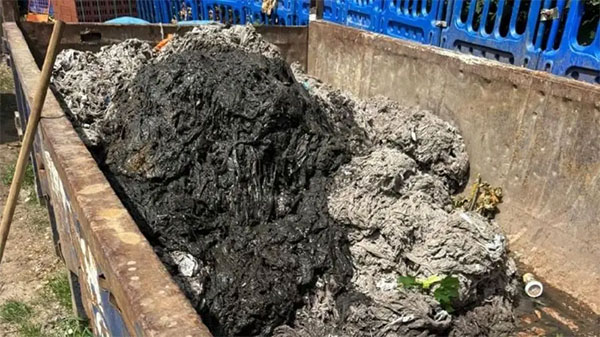
Last month, Thames Water announced that it had removed a massive fatberg weighing 100 tons from a sewer in West London.
Although most wet wipes sold in the UK are now made from non-plastic materials, the government and water companies still caution that they should not be labeled as "flushable," as they can still cause blockages. Wet wipe manufacturers interviewed by the BBC argue that their non-plastic "flushable" wipes have been thoroughly tested and meet all specifications.
Just last month, a massive, foul-smelling mass of wet wipes, fat, and oil was removed from a sewer in West London. It weighed as much as eight double-decker buses and took a specialist team over a month to break down.
The wet wipe market has seen steady growth over the years. According to government data from 2023, UK consumers purchased 32 billion wet wipes, around 12 billion of which contained plastic. If laid flat, they would cover 2,200 football fields.
While the new law in England is welcomed, water industry figures quickly pointed out its limitations. UK companies can still manufacture and export plastic wet wipes, and consumers can still purchase them from pharmacies (behind the counter) and online. Businesses, such as hotels, can also buy these wipes without restrictions.
The medical sector successfully lobbied for an exemption, arguing that non-plastic wipes absorb too much of the cleaning agents and disinfectants they contain, potentially endangering patient safety.
At the Minworth Sewage Treatment Works in the Midlands, the scale of the current problem is not only visible but also smellable. Minworth serves over 2 million people in the Birmingham and Black Country area, and Severn Trent, the operating company, says that 10 tons of wet wipes arrive here every day.
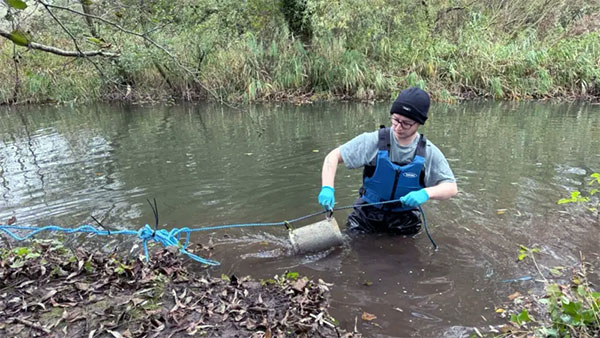
Daniel Jolly from the University of East Anglia has been researching the decomposition rate of biodegradable wet wipes.
"It's an absolute nightmare," says Grant Mitchell, Severn Trent's pipeline blockage manager, looking at the mountain of wet wipes in front of him. He has just shown how "un-flushables" are screened out of the sewage. The sight is quite unpleasant: dead rats, a rubber duck, and a large mass of dirty wet wipes.
"The problem with wet wipes is that they don't break down like toilet paper," he says. "They stay intact and stick to the grease from the kitchen, solidifying into fatbergs and causing flooding."
Also present was Emma Hardy, the Minister for Water and Floods. "This ban will make a huge difference," she said in an interview in the rain at Minworth. "I think people may have underestimated the problems caused by wet wipes."
Although many brands claim their wet wipes are "flushable" and environmentally friendly, whether they can and should be flushed down the toilet is still in question. Daniel Jolly is researching how quickly these biodegradable wet wipes break down. In the laboratory at the University of East Anglia in Norwich, he simulates the reaction of wet wipes when flushed.
"It's not toilet paper," he says, stirring the water in the tank, where the wet wipes slowly break down into fibers. "Even though the raw materials are similar, their structure is completely different and much more robust."
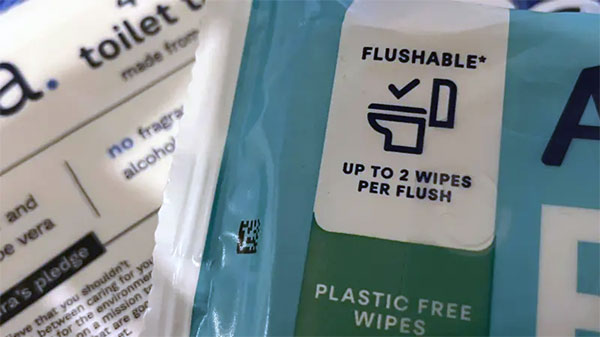
Now, many non-plastic wet wipes are labeled as "flushable", but the government and water companies say they should be thrown in the trash after use.
Jolly is also conducting experiments along the banks of the River Yare to confirm the decomposition speed of non-plastic wet wipes. "It can take months to a year, or even two years, depending on environmental conditions," he says. "It's much slower than toilet paper—which usually takes weeks to months—but far better than plastic wet wipes, which in some cases can exist for hundreds or even thousands of years."
Government-commissioned research has found that some non-plastic wet wipes fail the breakdown speed test, indicating they can still clog sewers. Jolly is currently studying the impact of these biodegradable wet wipes on aquatic life as they break down.
Jolly is currently researching the impact of these biodegradable wet wipes on aquatic life as they break down.
Until March 2024, UK water companies operated a certification system called "Fine to Flush," which permitted the disposal of certain wet wipes in toilets. However, the system was discontinued due to concerns about consumer confusion and replaced with the new slogan: "Bin the Wipe."
Now, the government and water companies' advice is very clear: only the three "P"s should go down the toilet—pee, paper, and poo—nothing else.
"Banning the sale of plastic-containing wet wipes is a step in the right direction," says a spokesperson for Water UK. "But what we really need is a ban on the manufacture of such products and a mandatory 'do not flush' label on all wet wipes."
Some wet wipe manufacturers, who label their products as "flushable," told the BBC that their products are actually moist toilet tissues. However, Water UK states that they are still wet wipes and should not be flushed.
"I would encourage them (wet wipes manufacturers) to show leadership now," says Hardy. "Stop claiming they are flushable and instead provide clear labeling that tells the public to throw them in the trash, not down the toilet."
Additional reporting by Gwyndaf Hughes.
Sywipe seizes every opportunity to use high-quality resources, including peer-reviewed research, to support the facts in our article. Learn more about our factory and how to keep the content accurate, reliable, and trustworthy.
Top 13 Flushable Wet Wipes Manufacturers in the USA (2025)
What are the Raw Materials Used in Wet Wipe Manufacturing?
Our Customers Always Come First
Trust is the Foundation of Our Service